.

.

Thursday, February 2, 2012

St. Brigid's Day - February 1st


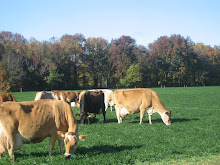
Today as we celebrate the feast of St. Brigid, we reflect on her compassion and love for dairy cows.  In a world full of sound bites and superficial arguments, the thought of St. Brigid, her kindness  and dedication to the dignity of manual work among animals in the dairy and respect for the rural  land gives us pause and a chance to ponder what is truly important. 

To learn more about St. Brigid's Day read below.


February 1st
St. Brigid’s Day


St. Brigid
- was born in A.D. 451 or 452 to a pagan father and a Christian slave mother.  Her impoverished, enslaved mother did her best to raise her well, and a white red-eared cow is said to have provided all the food St. Brigid needed to grow, indicating that she was special indeed as white red-eared cows are rare in IrelandWhile still a child she was put in charge of the dairy by her mother. One day she had given away so much milk and butter to poor people that none remained for the family. She feared her mother's displeasure and so resorted to prayer. When her mother visited the dairy she found such an abundance of milk and butter that she praised the dairy maids for their industry.  Today she remains the patron saint of dairy maids and is the patroness of Ireland.


Monday, December 5, 2011

St. Brigid's Happy Cows


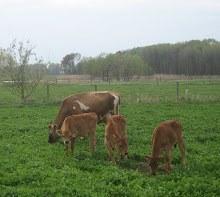
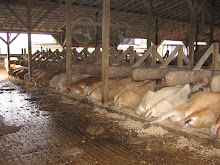
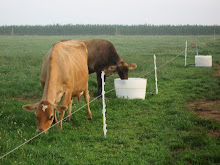
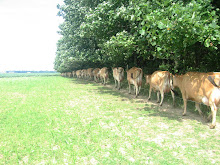
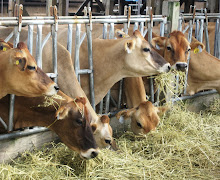
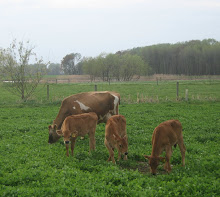
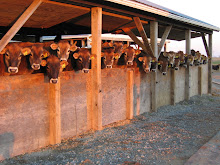
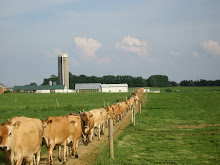
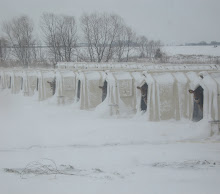
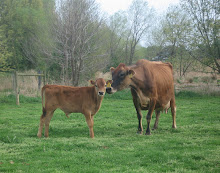
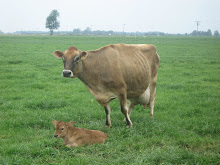
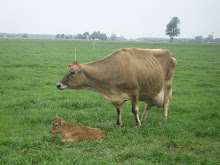
When our friend Pam calls, her first question is how are the happy cows?  While there are days when our cows are less happy – snow storms, torrential rains, high winds, excessive heat, we are usually more impacted by the nasty conditions than the cows.  In the winter, the freestall barn with the curtains closed provides a cozy space for the milking cows.  In the summer the same freestall barn with curtains opened and fans full tilt provides some reprieve.  However, the engineers who design barns can only imitate the environment where cows are happiest – outside on pasture.  Here is a capture of our happy cows on video before our grazing days ended last month.  


Monday, October 10, 2011

4th Annual Field to Fork Dinner


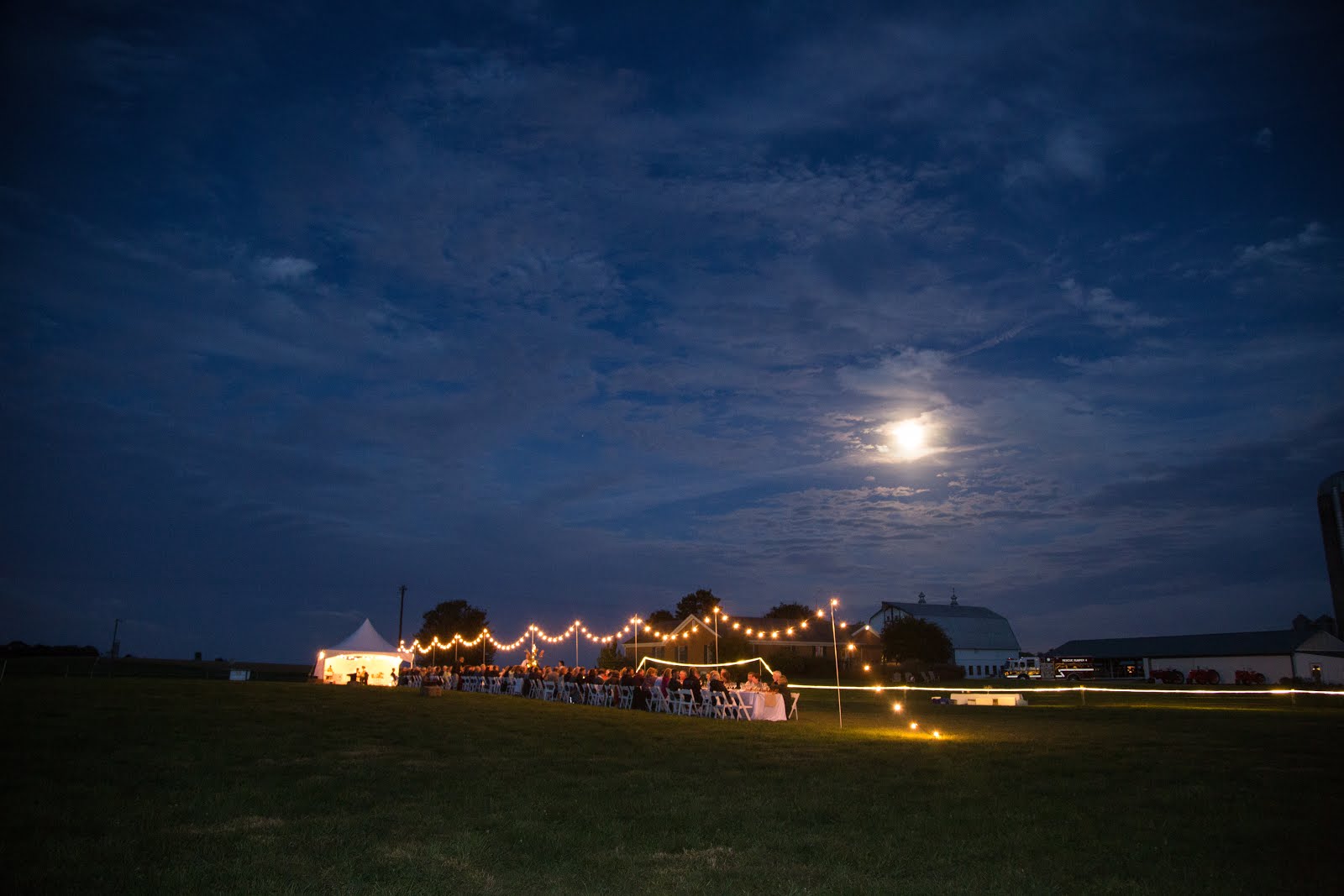
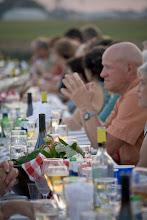
The morning of October 1 was chilly and windy. The weather forecast called for a 50% chance of rain. By 8 am, chef Dave Perry, Bob and I decided dinner would have to be inside. Time for Plan B! As much as we like to dine under the stars, we didn't want our guests to be
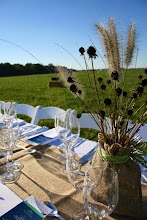
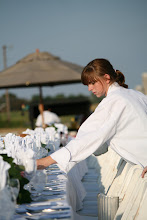
miserable so Bob converted our hay storage area/maternity pen into a dining room. Tuscan lights from Eastern Shore Tents and Events, straw bales and some giant mums added a festive ambience to the normally drab space. Bob made a door in the plywood wall for easy access by the catering team. We were ready by the time our 126 patrons arrived at 5 pm.

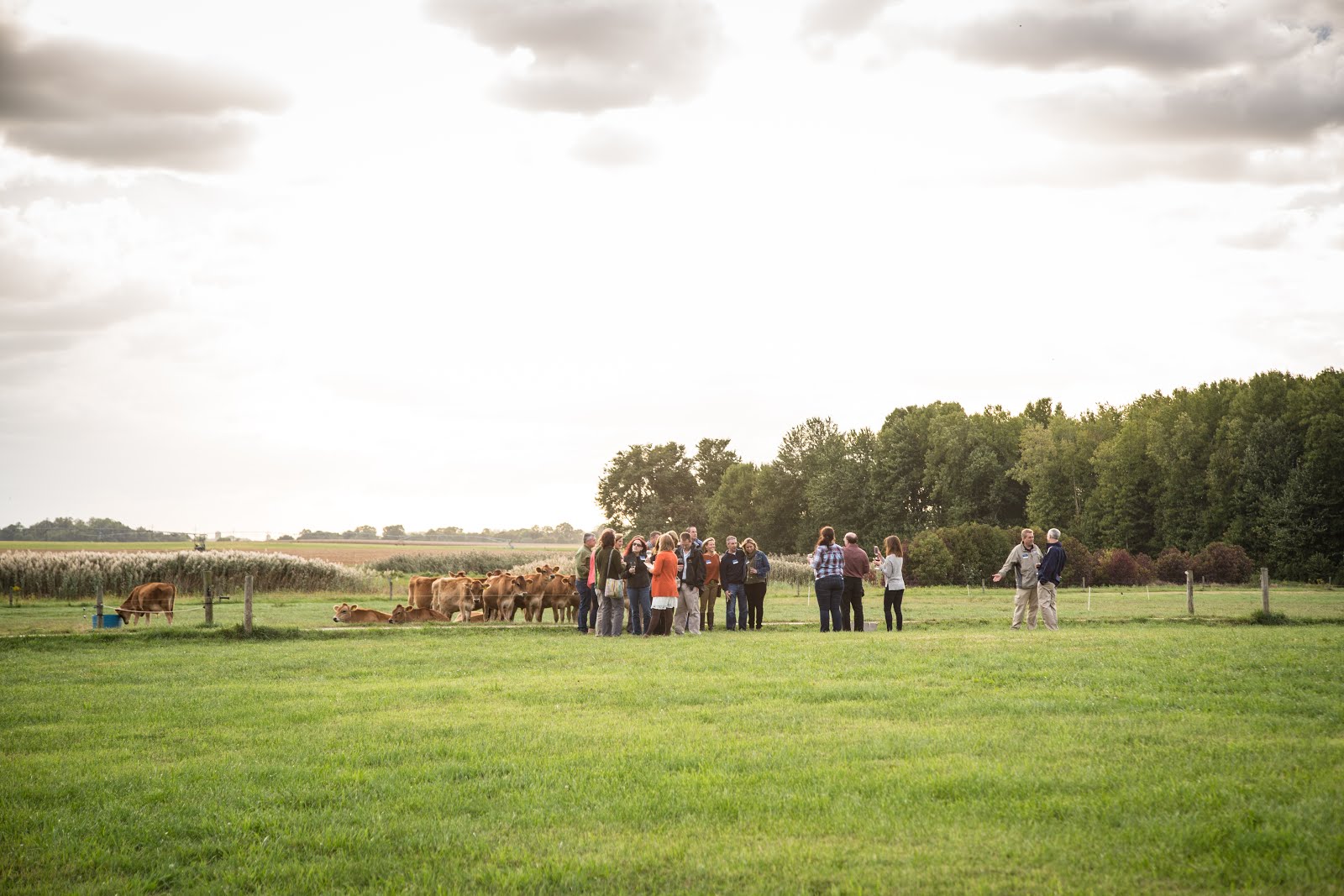
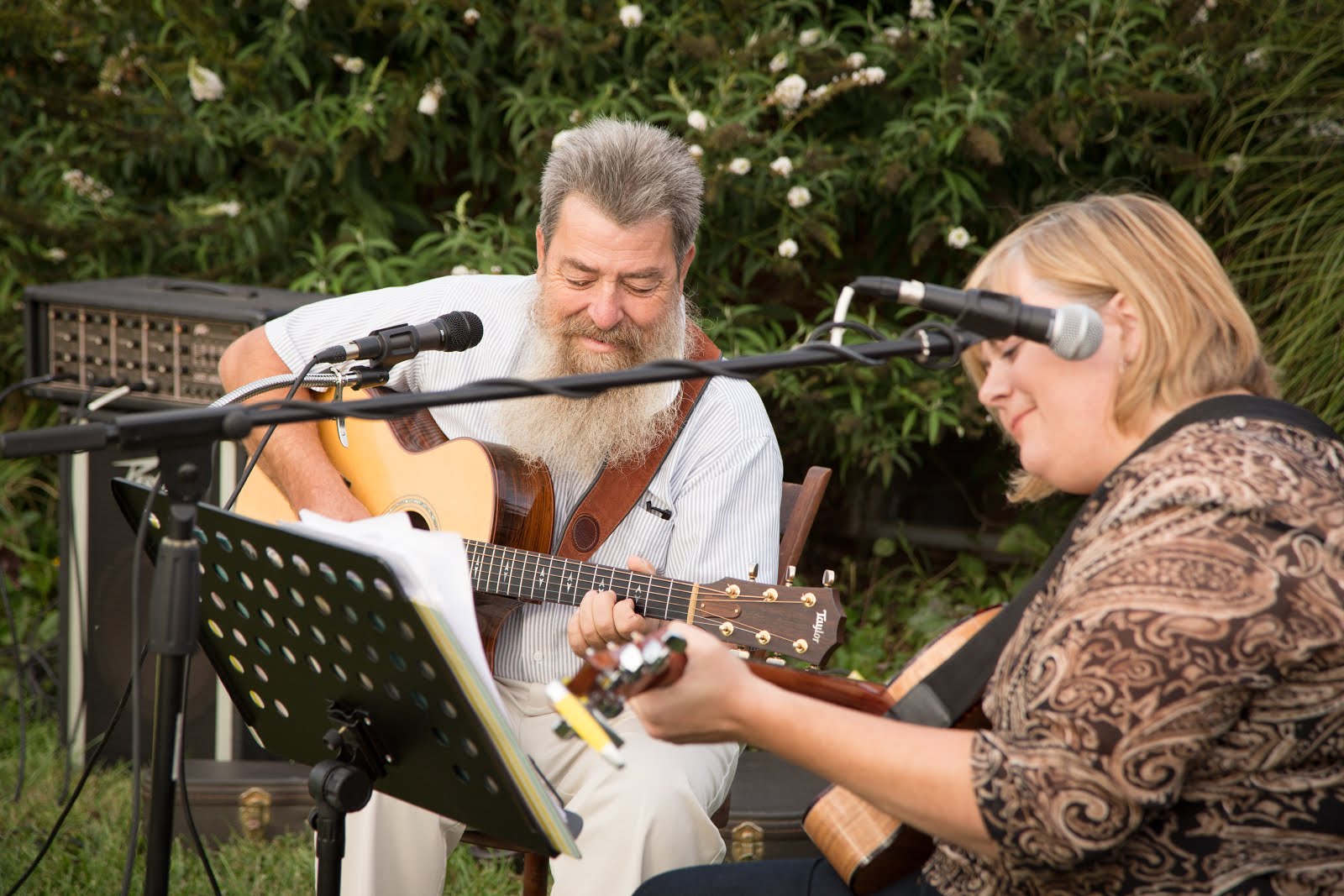
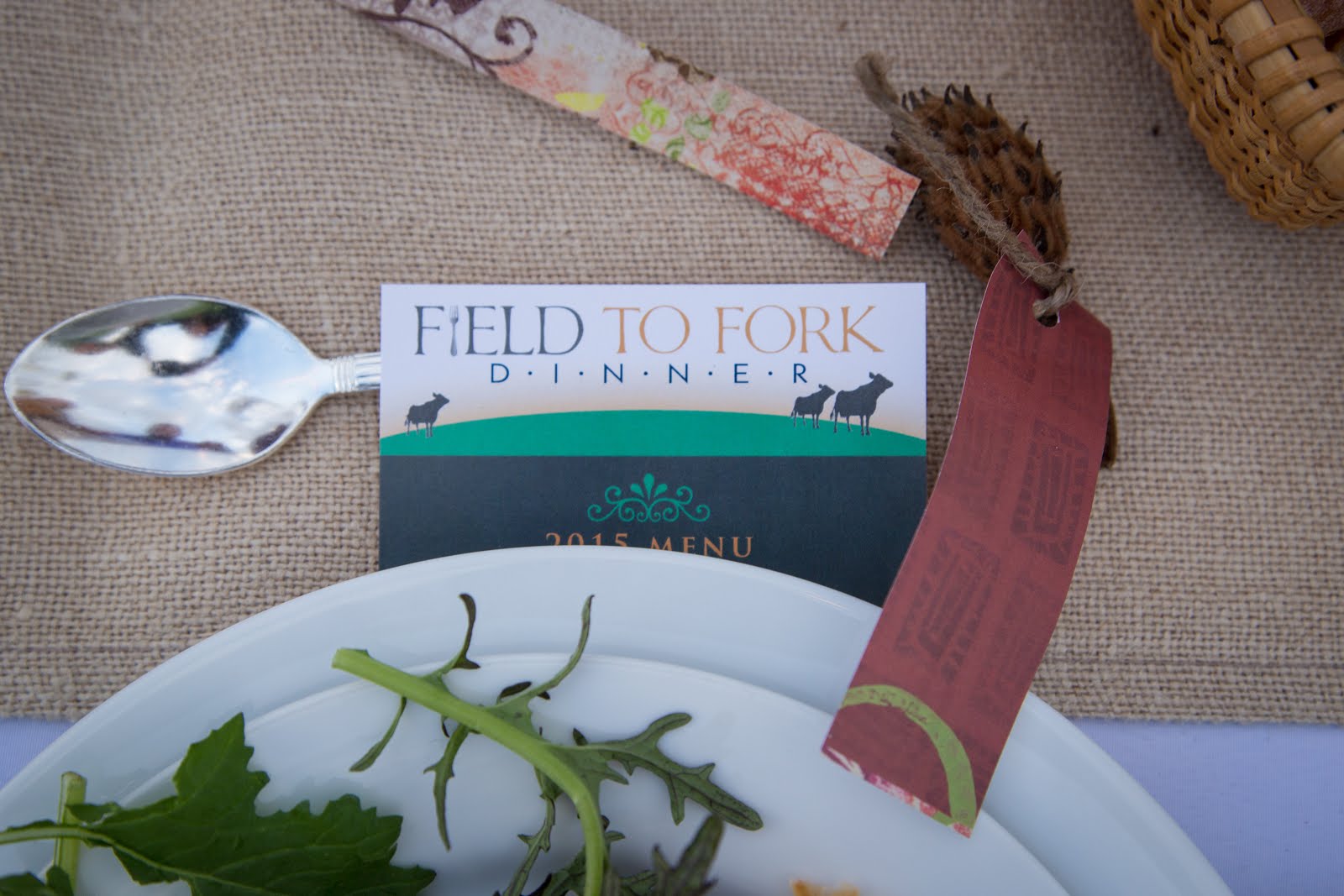
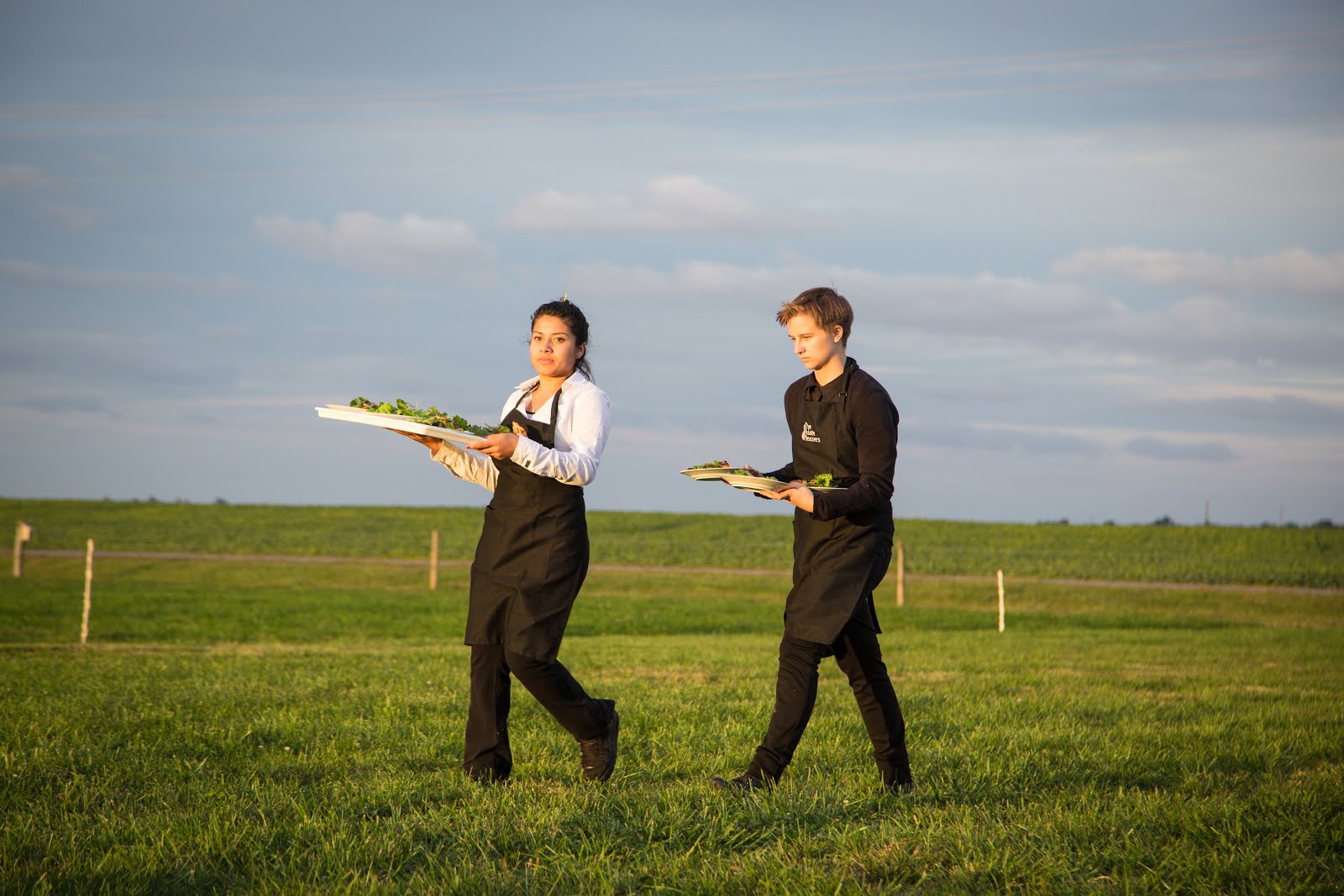
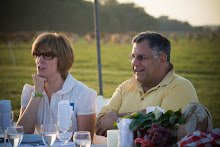
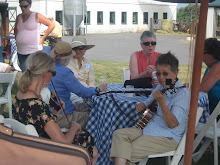
Guests enjoyed beer, wine, Chapel’s Creamery outstanding cheddar and blue cheeses on the lawn as Jim Stephanson and his band played a delightful mix of jazz and blues. The cows romped in the nearby pasture and eyed the party. At 6 o’clock, after the band’s customized version of “milk cow blues”, people began to claim their seats in the make shift ball room. Sweet cream of tomato soup with leeks and a dollop of cream and Against the Grain’s amazing artisan breads started the feast. Next, we showcased Colchester Farm’s beautiful arugula and radishes in a simple, yet delicious salad. The main entree, country meatloaf made with St. Brigid’s Farm ground beef, mashed potatoes, gravy and green beans exceeded expectations with many diners exclaiming the meatloaf was better than their own! For those who had room for dessert, Dave made pumpkin and apple pies which he topped with fresh whipped cream. The long neck pumpkins for the pies weighed 25 pounds each. The pumpkins, tomatoes, apples and fresh pressed cider came from Lockbriar Farms. The toasted pumpkin seeds made a perfect garnish.
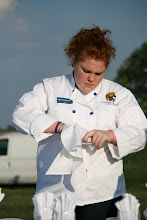
In between courses, our farmers, cheese maker and bread baker shared the trials, tribulations and successes they have experienced growing their produce and making their products. Next, Chef John Keller from the Kent County High School Culinary Arts program and his student, Alexander Maas talked about the wonderful program that was the beneficiary of last year’s dinner. Alexander stole the show with his honest and inspiring impression of working with the caterer. Finally, Captain Andrew McCown described the life changing experience Kent County kids have during a camping/sailing trip on the Chester River as part of the Echo Hill Outdoor School Explore Program. Thanks to the tremendous turnout for the dinner and donations by friends who could not attend, we will donate $3,000 for scholarships to this remarkable program.

Monday, July 25, 2011


Seats are filling fast for the 2011 Field to Fork dinner in part from the response to the NPR story by food commentator Bonny Wolf. You can find her story and listen to the audio about farm dinners around the country by clicking here. It was a hoot to hear her mention our dinner on Weekend Edition Sunday.

To reserve your seats for our dinner on October 1 from 5-9 PM, rain or shine, click on the RSVP link to the right.


For out of town guests, we recommend the Crow Farm B&B just 1/2 mile away or the Holiday Inn Express and Comfort Suites in nearby Chestertown.


Thursday, July 21, 2011

4th Grade Outdoor Education Farm Tour


We were pleased once again to be part of the Spring 4th Grade Outdoor Education Farm tour organized by Beth Hill with the University of Maryland Extension. Over two days, about 150 fourth graders from the five elementary schools in the county toured the farm and learned about the importance of dairy products in their diet.

Each child in the class of Tiffany Kennedy, the teacher at the Galena Middle School, wrote us a thank you note accompanied by a hand drawn picture. What a great way to integrate the tour with the class room. Below excerpts from some of our favorites.

Dear St. Brigid’s Dairy Farm,

When I saw the dairy farm I saw lost of cows grazing away. Also, I saw machined that milk cows also I saw a calf named Nowell. First we learned all the breeds of dairy cows Miss Judy has on her farm. Then we went to the milking parlor. We got to smell and feel the cows food. I also got to hold and feel there teeth and see how big there pills are. They were huge.

The best part was petting little Nowell and looking at the milking parlor. But petting Nowell was the best part because she was so calm and soft. I loved this trip and someday I want to be a dairy farmer you inspired me so much.

Sincerely,

Brenna

Dear St. Brigid’s Dairy Farm,

I enjoyed being at the farm. I enjoyed the little baby calf. She was cute. I had a blast.

Your friend,

Dylan

Dear St. Brigid’s Dairy Farm,

I was so happy that I went to St. Brigid’s Dairy Farm because when I saw the dairy farm, I saw cows in the field grazing away...We learned that cows only produce when they have a baby. I also know that a bull is a boy. A heifer is a girl. I also know that the dairy farm was named after a saint of knowledge...Well, thank you for inviting us to the farm. THANK YOU. I like your farm Miss Judy also you are the best in taking really good care.

Sincerely,

Liz

Sunday, April 17, 2011

My First Jersey

In 1969, I was a 12 year old 4-H member who was tired of losing to the fancy Holsteins I was showing my home grown calves against. I decided I wanted a Jersey and bought one at the sealed bid auction at the Litchfield County (CT) 4-H Fair for $157. I borrowed $10 from my younger sister who claimed the tail until I paid her back. My new calf was named Peet Farm Julhous Rita but we called her Jersey. Briggs and Beth Cunningham, who had a farm in Kent, Connecticut, were the generous donors of Rita. I adored Beth Cunningham!! She had strawberry blond hair, loads of freckles and was always smiling. Thus began my life long love of the Jersey cow.

This week, the Worton Elementary School’s kindergarten class visited the farm . Lo and behold, one of the delightful students on the field trip was Braydon Michael Wallace, the Cunningham's great grandson! Small world!!

Friday, April 1, 2011

Chestertown Literary Festival

Last weekend, Chestertown bookstores and other local food supporters sponsored the first Locavore” Literary Festival. The two day event provided locals the chance to hear and meet local bloggers and several renowned authors. The Lit Fest opened on Friday at Washington College with Chef Kent Tilton serving St. Brigid's Farm grass-fed beef in the dining hall to compliment the philosophy of the first speaker Lierre Keith, a former vegan and the author of The Vegetarian Myth: Food, Justice and Sustainability.

On Saturday, author Nancy Taylor Robson and bloggers Aundra Weissert and Tara Holste shared their experiences and insight as food writers. Robson has written freelance articles for 35 years and authored two books: a memoir of her six years on a coastal tug titled Woman in the Wheelhouse, and the award-winning novel Course of the Waterman. A Master Gardener, she writes and edits sections on gardening and food for the Chestertown Spy.

Bob and I split our work day so we could each attend a presentation. I was among the crowd of thirty or so at the Complete Bookseller who heard Bonny Wolf, author of Talking with My Mouth Full, discuss her adventures in eating locally in Talbot County. Her tales of cooking muskrat, searching for wild asparagus and foraging for mushrooms and dandelions were delightful.

A truly special part of the day was our invitation to lunch sponsored by Washington College's Center for the Environment and Society featuring local foods with the authors and other guests at Brooks Tavern. The menu included the St. Brigid’s Farm burger, a three egg omelet with Kennedyville eggs, shad roe and a Bibb lettuce salad with bacon. It was my lucky day as I sat next to Lucie Snodgrass, author of Dishing Up Maryland, 150 Recipes from the Alleghenies to the Chesapeake Bay. Drew Debnam, who works for us after school, gave us the book for Christmas so I was already a big fan of Lucie. She is very down to earth and fascinating to talk to.

Bob sat next to Paul Greenberg at lunch and then went to his session. Paul wrote Four Fishes, The Future of the Last Wild Food. In his session and book, he examined the history of the fish that dominate our menu – salmon, sea bass, cod and tuna- and investigated where each stands at this critical moment in time. Bob found the session a bit depressing but has hope that with the help of Paul’s book, educated consumers can start to heal the oceans and fight for a world where sustainable seafood is the rule rather than the exception.